Why Choosing the Right Cloud Telephony Service Provider Can Transform Your Business Communication
In today’s fast-moving digital world, communication is the backbone of every successful business. Customers expect instant responses, employees need seamless collaboration, and organizations require flexible communication systems that can grow with their business. Choosing a reliable Cloud Telephony Service Provider is one of the smartest investments a company can make to improve customer engagement, reduce operational costs, and increase productivity. Unlike traditional phone systems that rely on expensive hardware and complex infrastructure, cloud telephony delivers a modern communication platform that is scalable, secure, and accessible from anywhere.
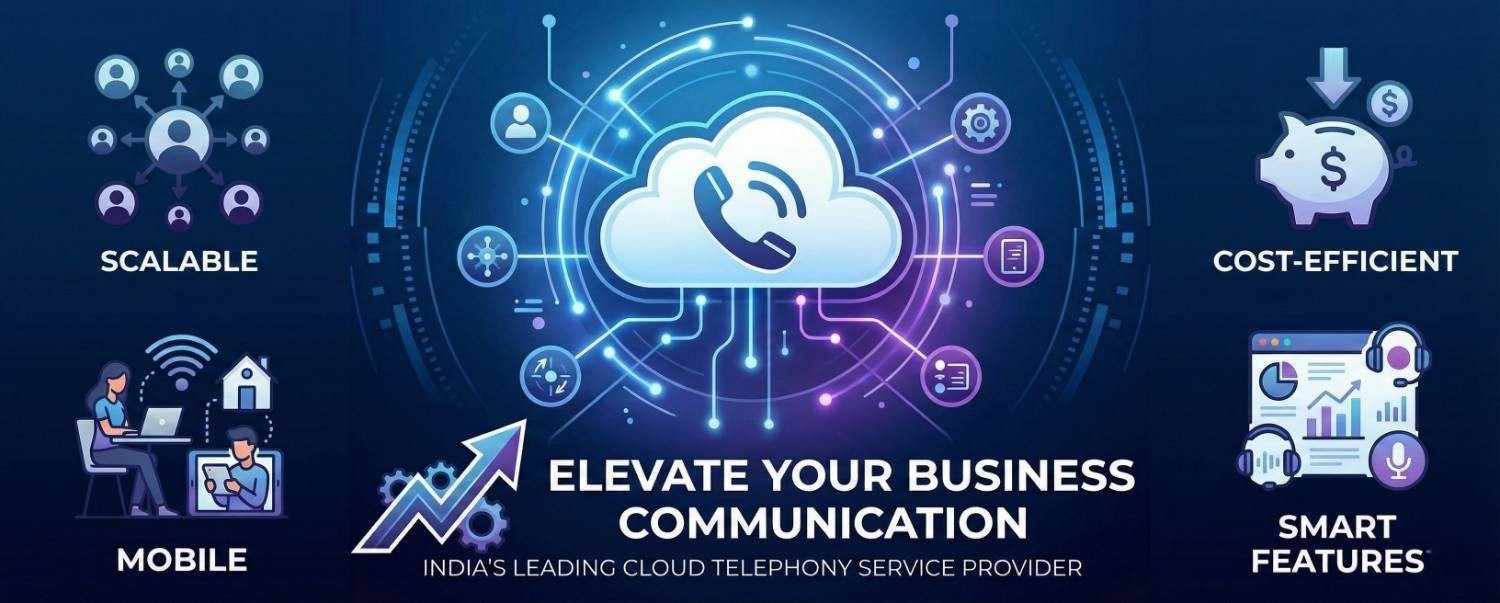
What is Cloud Telephony?
Cloud telephony is an internet-based communication system that enables businesses to manage voice calls, IVR, call routing, voicemail, conferencing, and customer interactions through cloud-hosted infrastructure. Instead of installing on-premises PBX hardware, organizations access communication services over the internet using VoIP technology.
Because the system is hosted in secure data centers, businesses can eliminate hardware maintenance while benefiting from continuous updates, enhanced reliability, and simplified administration.
Why Businesses Are Moving to Cloud Telephony
Traditional business phone systems often involve high installation costs, maintenance expenses, and limited scalability. Modern organizations require communication solutions that support hybrid workforces, multiple office locations, and increasing customer demands.
Cloud telephony addresses these challenges by offering:
- Lower communication costs
- Quick deployment
- Remote accessibility
- Business continuity
- Flexible scalability
- High-definition voice quality
- Centralized administration
- Improved customer experience
These advantages make cloud telephony one of the fastest-growing business communication technologies.
Key Features Offered by a Cloud Telephony Service Provider
Smart IVR (Interactive Voice Response)
Automatically directs customers to the appropriate department, reducing waiting time and improving customer satisfaction.
Intelligent Call Routing
Calls are routed based on business rules, agent availability, or department requirements, ensuring efficient call handling.
Virtual Business Numbers
Businesses can establish a professional presence without depending on physical office telephone lines.
Call Recording
Automatically records conversations for quality monitoring, compliance, employee training, and customer support improvement.
Real-Time Call Analytics
Managers can monitor call volume, agent performance, missed calls, and customer interactions using advanced reporting dashboards.
CRM Integration
Cloud telephony integrates with CRM platforms, allowing agents to access customer information instantly during conversations.
Multi-Level Call Queues
Incoming calls are organized efficiently during peak business hours, minimizing missed opportunities.
Remote Access
Employees can make and receive office calls from laptops, desktops, IP phones, or mobile devices, making cloud telephony ideal for hybrid and remote work.
Benefits for Businesses
Reduced Infrastructure Costs
Since communication infrastructure is hosted in the cloud, businesses avoid the expense of purchasing and maintaining PBX hardware.
Easy Scalability
Adding users, departments, or new office locations requires only a few configuration changes, making expansion simple and cost-effective.
Increased Productivity
Employees can collaborate more effectively through integrated communication tools while managers gain greater visibility into business performance.
Better Customer Experience
Intelligent routing, IVR, and faster response times ensure customers receive prompt and professional service.
High Availability
Reliable cloud platforms provide excellent uptime with redundancy and backup systems that minimize communication disruptions.
Industries That Benefit from Cloud Telephony
Cloud telephony serves organizations across multiple industries, including:
- Call Centers
- Corporate Enterprises
- Healthcare
- Banking & Financial Services
- Educational Institutions
- Hospitality
- Real Estate
- E-commerce
- Logistics
- Government Organizations
Every industry benefits from improved communication efficiency and simplified customer interaction management.
Essential Features to Consider
When selecting a cloud telephony solution, businesses should evaluate:
- Uptime and reliability
- Security standards
- IVR capabilities
- Call recording
- CRM integration
- Analytics and reporting
- Mobile accessibility
- Scalability
- API support
- Technical support
Choosing the right provider ensures long-term value and operational efficiency.
Security and Reliability
Business communication contains valuable information that must remain secure.
Modern cloud telephony platforms include:
- Encrypted voice communication
- Secure user authentication
- Access control
- Firewall protection
- Automatic software updates
- Backup and disaster recovery
- Continuous system monitoring
These features help organizations maintain secure and uninterrupted communication.
Supporting Hybrid and Remote Work
One of the biggest advantages of cloud telephony is its ability to support distributed teams. Employees can remain connected from virtually any location using internet-enabled devices while maintaining access to business numbers, voicemail, and collaboration tools.
This flexibility enables organizations to maintain productivity regardless of where employees are working.
Future Trends in Cloud Telephony
Cloud communication continues to evolve with technologies such as:
- AI-powered virtual assistants
- Intelligent call routing
- Voice analytics
- Predictive customer support
- Unified Communications (UC)
- Omnichannel customer engagement
- Advanced automation
- Cloud-based contact centers
These innovations will further improve communication efficiency while enhancing customer experiences.
Why Choose AKOM Technologies?
AKOM Technologies provides advanced cloud telephony solutions designed for modern businesses. Its platform offers features including smart IVR, call routing, call recording, virtual numbers, CRM integration, analytics, and scalable communication tools that help businesses improve customer engagement while reducing operational costs. Backed by reliable infrastructure and expert technical support, AKOM delivers communication solutions suitable for startups, SMEs, and large enterprises.
Conclusion
Choosing the right Cloud Telephony Service Provider is essential for businesses looking to modernize communication, improve customer service, and reduce operational expenses. Cloud telephony delivers flexibility, scalability, and advanced features that traditional phone systems cannot match. Whether you operate a small business, a growing enterprise, or a large contact center, AKOM Technologies provides reliable cloud telephony solutions that empower organizations with secure, efficient, and future-ready business communication.
Frequently Asked Questions (FAQs)
1. What is a Cloud Telephony Service Provider?
A Cloud Telephony Service Provider offers internet-based business communication solutions that enable organizations to manage voice calls, IVR, call routing, call recording, and other telephony services without investing in traditional PBX hardware. These solutions are hosted on the cloud, making them flexible, scalable, and cost-effective.
2. How does cloud telephony work?
Cloud telephony uses Voice over Internet Protocol (VoIP) technology to transmit voice calls over the internet. Instead of relying on physical phone lines, calls are managed through secure cloud servers, allowing employees to make and receive business calls from desktops, smartphones, or laptops.
3. What are the benefits of using cloud telephony for businesses?
Cloud telephony offers numerous advantages, including lower communication costs, easy scalability, remote accessibility, improved customer service, intelligent call routing, call recording, CRM integration, and real-time reporting. It also reduces the need for expensive hardware and ongoing maintenance.
4. Is cloud telephony suitable for small businesses?
Yes. Cloud telephony is an excellent solution for startups and small businesses because it requires minimal upfront investment and can scale as the business grows. It provides enterprise-grade communication features at an affordable monthly cost.
5. Which industries benefit the most from cloud telephony?
Cloud telephony is widely used across industries such as healthcare, education, banking and financial services, e-commerce, logistics, real estate, travel, hospitality, customer support, and IT services. Any business that relies on customer communication can benefit from cloud telephony.


Comments
Post a Comment